
Empires have risen and fallen in shorter periods than the amount of time Refiloe Phoolo has spent trying to convince the world that he is the messiah of new school
African music. Figuratively speaking, usually 15 minutes is all one gets. And after subtracting the time you spend convincing the promoter to pay you, as well as arguing with the sound guy because your mic is bad and the volume in the venue is too low and distorted, you’re looking at about 3:57 minutes left on your clock. In that time you can either produce an entitled rant about how the industry don’t love you and how you’re too ‘ahead of time’ for people’s taste; or if you’re Cassper Nyovest you can produce a
‘Doc Shebeleza’ and completely take over the game. Throw in the facts that his age is the same number as the basketball shot clock and he’s carrying his family and his city on his back, and it’s easy to see why the prince of Maftown is living each day like it might be his last. The time on this particular day happens to be 14:08. We’re posted up on the couch of his cosy new apartment in the northern suburbs of Jo’burg where he has found refuge upstairs from a family who constantly complain about the amount of noise that comes from his crib. “Eish, that’s the thing about the ‘burbs, you have to keep quiet. In the hood, there was noise outside 24/7. You’d wake up and hear a taxi blasting music and you bopped your head and peeked out the window to greet the timer whose car it was coming from. Outside the apartment: a scene from Touched by an Angel with lush landscaped flora, swimming pools and the kind of security that will make your kush dealer nervous. Inside the apartment? That scene from Boyz n the Hood where Doughboy and his homies are playing video games, snacking, talking smack and using the kind of language that would make both their mothers and their pastors cringe.
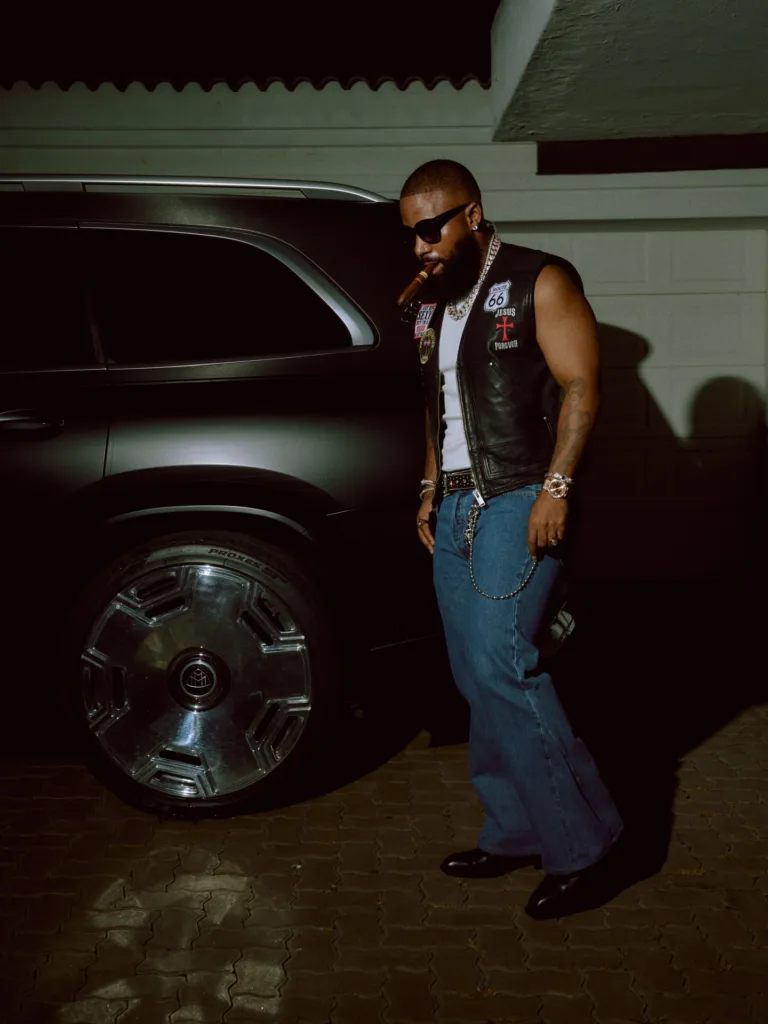
FIFA is the game of choice. And quite frankly, it’s not looking good for Cassper. It’s just a few minutes after halftime and he’s losing 3-0 to the technician who’s come by to help him figure out the controls of his massive new TV (slightly bigger than an obese nine-year-old) and his homies are not giving him a break about it. “I’m great with
comebacks though. Just this morning I beat Carpo in the last few minutes and he couldn’t believe it. Just watch,” he reassures. Long story short, he lost. But luckily for his sake (and ours), in the realworld, being a musical prodigy with the nation at your feet is a much stronger currency than being a don at FIFA on PS4. “I used to work with a dude by the name of Beat Junkie from Maftown. He and I had a falling out and after that I had no choice but to start making beats,” he explains, as we sit down in a section of the house he’s turned into a home studio. “I started to remember things from my time witnessing Beat Junkie produce. So I would go on music programs and just throw drums on that sh*t. I’d get loops from the net and when I’d release the songs, people would be like ‘who produced this?’ and then I started to think that maybe I could do the producer thing too.” Emerging from trying circumstances to attain success is nothing new to Cassper. Many of his major achievements presented themselves as career-damaging challenges, leaving him backed into a corner with a choice to either admit defeat or gather himself and fight his way out tooth and nail. “I know it’s cheesy because every rapper in the world says it these days, but I dropped out of school early. I was 16. I always knew who I was and that I was going to make it in this path I’m pursuing right now,” he says with conviction. “And I don’t say that in order to preach to kids that education is not important.
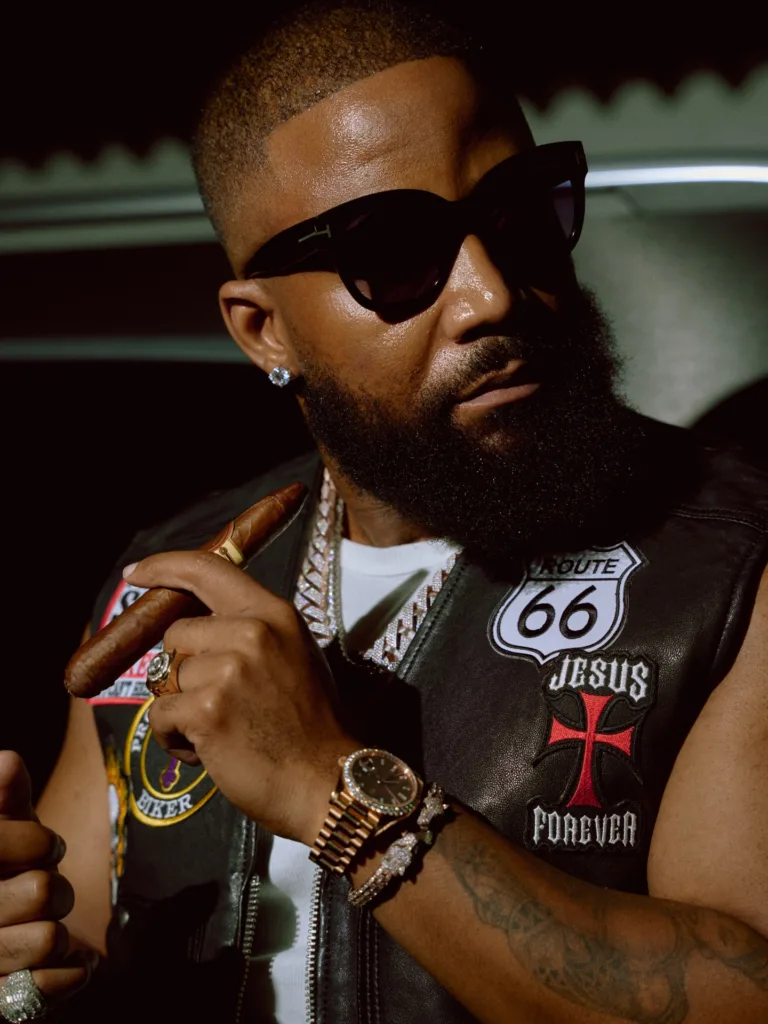
It is both my parents were teachers so you can imagine how crazy that must have been for them and for my family. But I was determined to be an entertainer; I knew that since I was a young’n. And after I made the decision to drop out I had that much more to prove to myself and everyone around me.”The fact that Cassper was once upon a time able to bag the subject of half of the nation’s wet dreams, actress and presenter Boity Thulo, earns him mad respect. And for a while after that information surfaced, it was enough to get him some daps from all the industry dudes whose fantasies only ever came as true as damp tissues and sticky magazine pages. But even the Boity effect has its limits and can only take one so far. Back then no one was trying to hear anything from a supposed rapper who dressed like a kwaito star and was the only man on the planet not named Steven Seagal rocking a ponytail in the 21st century. And during a time when South African hip hop was in the early stages of forging an identity next to more respected genres like house and kwaito, there was no way he was going to get a pass from the OGs if the memo wasn’t hip hop beats, Supras (as opposed to All-Stars) and fresh fades. Not until Jabba came along. “Yeah, I still go through it. People look at how I dress, how I speak, the delivery of some of my lyrics, the fact that my videos are shot in the hood and not in the club, and even the sound on songs like ‘Wahala’ and say that I’m not a rapper. They say I’m not hip hop. Remember Jabba went through the same sh*t. Now he’s the biggest thing on this side of the planet,” he defends. Hailing from Mahikeng, Cassper naturally gravitated towards an alternative sound of rap that was forming in the early 2000s, now known to all as motswako music, championed by rappers like Khuli Chana, JR and HHP.
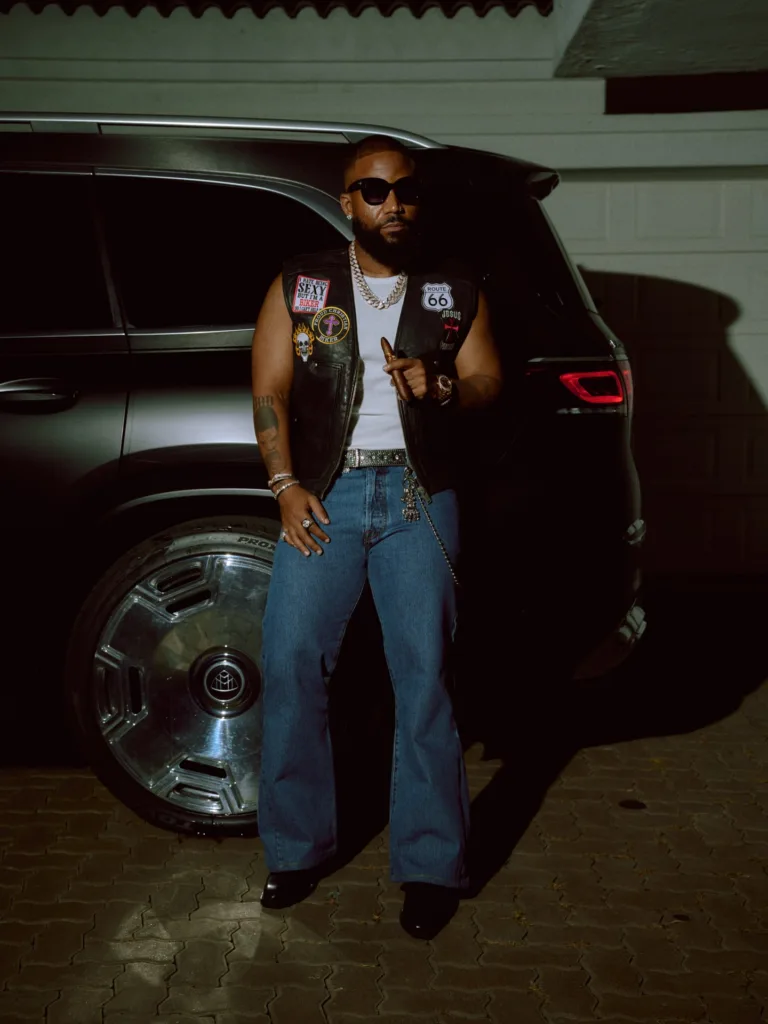
And three years ago when he seemed to be at a stalemate in his career, HHP came along and lent a hand in the form of a feature on a song called ‘Wam Tseba Mtho’ and subsequently tour and schooling him in the game. This came to help define his sound. “What people don’t understand is that kwaito is our sound. Not just a genre, but our tradition, it’s part of who we are. It’s the same as the beads around our ankles and our necks. It’s the beat that Africa moves to. Hip hop started in the States and its sources were jazz and soul because there was nothing before that. So when the sound of hip hop developed overseas, it ended up sounding the way it does now because of the jazz samples. With us, it’s house and kwaito; those have always existed here. Our hip hop is not going to sound like theirs because our musical and cultural origins are not the same as theirs. When we create an identity for our sound it will be based on indigenous music that already exists here in Africa. And maybe for now it’s hard to draw the line of what’s kwaito and what’s hip hop but that’s part of the process of finding ourselves. As long as we’re making quality sh*t and we’re growing. He continues: “Growing up my heroes were not really Nas and Pac and all those guys; they were Doc Shebeleza and Mandoza and other cats from the hood who I viewed as being cool because they represented something that was real to me.
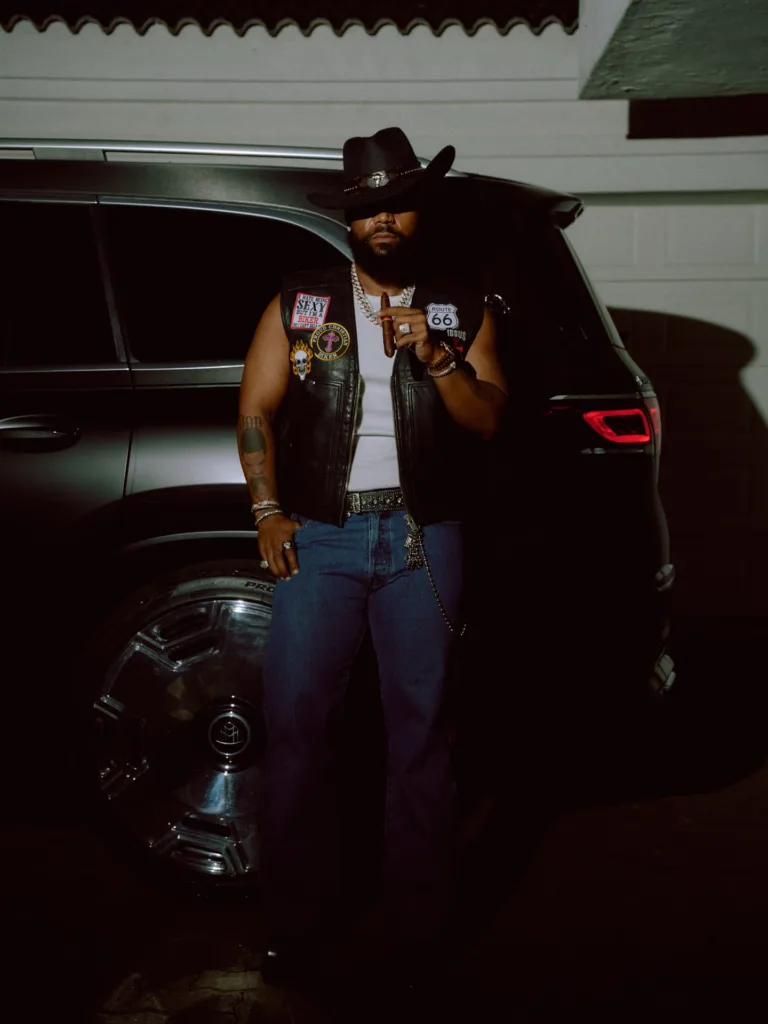
The fact that I choose to express myself using hip hop as a medium at this stage in my life doesn’t mean that all those things from my childhood disappear. That’s who I am so that’s what you will see from the way that I carry myself to my attitude. I know a lot of the hip hop OGs are always like ‘nah, we need that real sh*t back’ but that kwaito-house tempo is our identity. We can’t abandon that.” And the results speak for themselves. Since Cassper caught fire with a viral hit called ‘Halla At a Pantsula’ four years ago, he’s been on the brink of blowing; more so in hoods across the country where he has amassed hundreds and thousands of believers who find identity in his uncompromised kasi persona. “I think people are just proud to see someone who is authentically South African doing his thing. I’m one of the guys, I dress like everyone else and speak like everyone else. It’s not artificial, it’s who I am and it just so happens that it works for me and I’m grateful that I don’t need to try to be anything that I’m not in order for people to like my music. I believe that if you’re true to yourself people will naturally be able to find something that they relate to.” Still, there are musicians who are more strategic than artistic
They study consumer habits and trends and stay abreast of what their audience wants. And then there are those who are true to their skill and artistic inclination first and foremost, and risk failure for the integrity of the craft at all costs. The perception of the first kind of musician is often that they are gimmicky and prostitute the essence of the genre for commercial hits. An accusation that Cassper is too familiar with for going from making rap songs to a song that possesses a Nigerian flair to an Uhuru-assisted song with a strong house foundation, all in succession. With the commercial success of a lot of his music it’s sometimes easier to view him as an artist who just makes great music as opposed to a rapper with rapping skills. Upon listening to the intro of his album, a five-minute piano ballad with no hook on which he raps bar for bar, bearing all the vulnerabilities, challenges and perks that come with the position he finds himself in as a result of success, he slowly nods in quiet satisfaction of the work he’s produced and goes on to confess that he has something to prove to all the so-called MCs in the game who don’t see him as a factor. “My first ever interview with HYPE three years ago I said it. I said that I was a good rapper, one of the best; but I want my legacy in the game to be more than just that of a rapper.
So yeah, I’ve made some songs that have reached some people who would’ve never known who I was if I was just about spitting bars. But with this album, it’s an opportunity for me to balance those opinions. There are people who think the music that I make that is more commercial and targeted at a wider audience is great. And on the other hand there are people who know I can spit and hate me for making those watered-down joints as opposed to the hard rap songs. I set out to make music that people will bump in their cribs while they’re chilling out on a Sunday afternoon ‘cause it’s musical and it’s meaningful. The album is not about turn-up joints. I’m tryna prove that I can f*cking rap. As much as it pays to have ‘Gusheshe’ and ‘Doc Shebeleza’ you don’t wanna be that guy whose peers don’t respect him ‘cause he’s selling out his music and his culture for quick gwap.” the country, my sh*t it is’ is because I was tired of him misleading people. That was before ‘Caracara’ came through because that song completely took over everything. But before that ‘Doc Shebeleza’ was everything. And that must’ve really offended him because he started tweeting all that childish sh*t afterwards.” “I’m not that guy parading every single one of my accomplishments and making a noise about it, that’s just not who I am. But it got to a point where he was making it seem like he was the sole leader of the game, and as the person with the actual biggest song, you can only keep quiet for so long after he starts getting disrespectful to his peers and to the industry. “I can’t be mad at him because some of it is not his fault; it’s more a media thing
He’s behaving like this because the media think everything he does is newsworthy. I have a line in the intro of my album that says ‘I wish the media would treat me like Kiernan and them.’ People will say whatever they want about it but I felt like I had to say that because it would’ve haunted me if I didn’t. Because I’m out here doing big things too. Just because I’m not bragging about them on Twitter and popping bottles it doesn’t mean they’re not happening. I mean I remember that n*gga posting a picture of him casually chilling in his crib… and it was news! It was everywhere. V-entertainment, MTV; all those guys were all over it. I was like, for real? Everything this dude does is newsworthy. And at the time that I wrote that verse, I was thinking that I wish the media would treat me like that cos I’m doing sh*t. Like when I posted the picture of Wiz Khalifa and I. The following week they were talking about the album artwork and I was like, wait a minute. Are you guys gonna ignore the fact that this guy personally tweeted me, followed me on Twitter, sent me a shout-out and invited me to his show? Are you gonna ignore the fact that I spent the past week on tour doing motivational talks for the kids at schools all over the country? That ‘Doc Shebeleza’ had over 200,000 downloads and that ‘Phumakim’ almost matched that record in just 24 hours? Are you gonna ignore that I’m booked almost every single day of the week and I’m supporting my family with the gift that God gave me? That I’m saying the realest sh*t in my music and that I’m here to grow the industry and not just uplift myself? “That’s why I say ‘I’m proud to announce I just bought my mama a crib, you tell me what quality is’ on my song. Because people still want me parading out here with money and grills. I don’t need to be on the streets with f*cking bottles and Bentleys every day. But you’re gonna report about a guy chilling at his crib?” He speaks calmly, with a sense of indifference and not anger and frustration on the matter when asked what he thinks the cause of the friction is. “Obviously he feels threatened, everybody can see it. If I wasn’t a factor, he wouldn’t tweet about me or tweet at me
There are a lot of n*ggas who take shots at him every day on Twitter but he doesn’t respond to them. Why? Because they don’t matter. He’s basically saying to the people that I’m his biggest threat. The funny thing is there’s a lot he has said in his music about himself back then that can be used against him right now. He said ‘you can’t be the new kid on the block twice,’ remember that line?” He continues: “At a certain point it got really boring and childish. And I thought about it and I realised there’s nothing that can come from this situation. Because firstly, this n*gga deletes his sh*t after tweeting it. So what happens is, it makes it look like I’m the one provoking the whole situation. So he’s a coward. If you’re going to tweet something you need to stand by it. Like, why the f*ck do you keep talking about me? If you’ve got a problem with me, see me in the streets, f*ck me up. Make a song, do something; anything. Don’t be out there tweeting about me. I started feeling like I was in high school again. I’ve been through this sh*t too many times in my life. I’ve never lost a battle in life but I didn’t gain sh*t from them. I’ve had beef with so many n*ggas growing up, even in the rap game. I’m still outchea. I know how much time and energy this sh*t consumes, how much it deviates focus from the things that matter. Every day you’re thinking about this guy because people remind you of it all the time. When you’re out you need to be alert in case some sh*t pops off. It’s exhausting and
pointless.” After a subliminal back and forth exchange on Twitter, which included AKA jabbing at Cassper about the incident that involved Cassper bein gifted a BMW on T-bo Touch’s show and then putting out a press release the following day respectfully declining the offer, as well as Cassper’s free music sharing compared to AKA’s iTune downloads, Cassper admits that he was tempted to fire back but the process of creating his album helped him regain perspective of what his priorities are.
“Honestly, in the beginning I felt the pressure to respond. But I got this far by making music. I’m going to be the best. I’m going to be the biggest. In fact, I am the best, but I’m going to be the biggest. The only way I’m going to reach my destiny is if I stick to the way I did this thing before all these other things – money, women, stupid beefs – were a factor. The only thing that can make me lose is making music or moves that will distract me from that path. “And I said it on records; ‘I don’t give a f*ck when n*ggas diss me. I’m trying to change my family’s lives before I’m six feet.’ That’s what I do this for. That’s why I’m here! Because, not to curse myself but, I’ve seen so much bad sh*t in my short time on this earth and don’t know how long I’m gonna live. So while I’m here I can fight for the right things. I can make a difference in my family and community’s lives. Because those are the people who are going to be affected by whether I fail or succeed. If I had to go back to having nothing, they would be the ones to get hurt. Those are the people who really matter. These people following me on Twitter and people singing my name, they choose to love. It takes one thing to change their opinion; just like how a year ago I wasn’t sh*t and now I’m somebody to them. I didn’t have to convince my mom to love me, she just did. So for me that’s what it got to.” Though Cassper is adamant that he will not pursue the beef (much to the disappointment of everyone who was hoping to witness a lyrical battle), he assures us that the fear of failure is the last thing he’s worried about. “What would I be proving by taking food from this n*gga’s plate? ‘Cause that’s what would happen. I could do it. I could wake up tomorrow and release the hottest diss record ever. ‘Ether’ the game, you know? But what would I get from that really? Am I going to walk around every day with a plaque, satisfied with knowing that homeboy is out there struggling every day because of me? Is that a trophy? Is it necessary?
your potential and holds you to an unrealistic standard. But also, you haven’t quite made it yet and still have to prove your worth, so folks are quick to call you to criticise the second you take a wrong step. The most insignificant thing can change opinions. Fans are fickle. A reality that, after a successful run with ‘Gusheshe’ and ‘Doc Shebeleza’ and six SA Hip Hop Awards, on the fortnight of the release of his album Tsholofelo, Cassper is well aware of. As he plays more songs from his album he becomes nostalgic. “Damn, it took me 10 years to make this album. I remember Ganja Beatz and I would make something happen, think we made it and the deal wouldn’t come through and we’d be back to the drawing board. Over and over again I went through that process.” In a culture of vultures and smoke and mirrors, sometimes being honest and vulnerable can be to one’s detriment. But the many circumstances of his past leading up to Cassper’s current position have left him with a different perspective on music and life in general. When he starts to break down the philosophy of his music, it becomes clear that his emotional investment into his debut album lies a lot deeper than the desire for chart toppers and street cred. “My sister gave me her lunch money when I was coming to Jo’burg to pursue my dream in 2010. When I first came here before that, it didn’t work out so I had to go back home to my parents’ house since I had nothing to my name. After a year I decided it was time to try again. My parents didn’t have sh*t and no one believed back then and for some reason, she offered me her R100 lunch money to sustain. That R100 was more to me than I could ever pay her back right now. It literally saved my life. My sister’s name is Tsholofelo and that’s why I named my album that. It means ‘hope’. That’s who I do it for; her and the rest of my family.” We’re interrupted by his manager who insists that they have to leave because he has a meeting with a client for a potential endorsement, andthey hurry off in yet another battle against time. Later that day Cassper’s PR team releases a statement announcing Cassper as the new brand
ambassador for the product. He’s winning. It’s Cassper time.