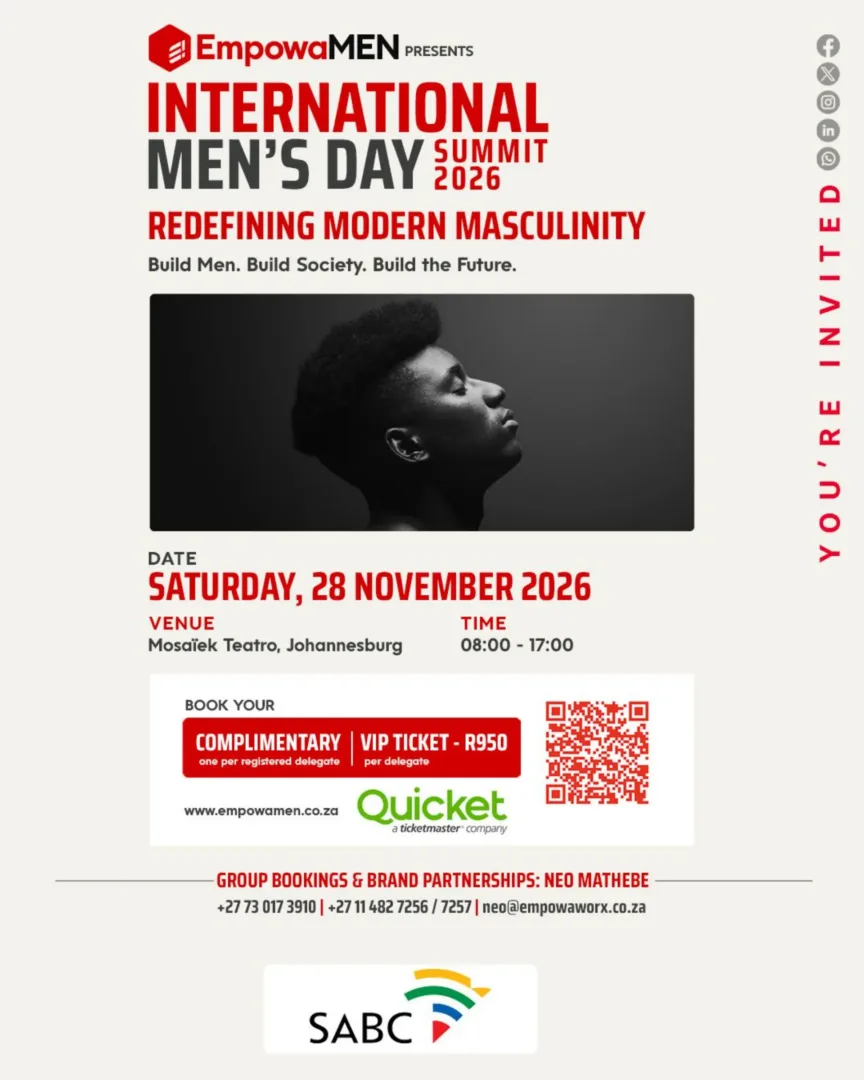
This year’s summit theme is “Redefining Modern Masculinity.” What inspired the creation of EmpowaMen, and what conversations do you believe men in today’s society are not having enough?
EmpowaMen grew out of one conviction: masculinity needs to be redefined, and the new definition can’t keep coming from the systems men had to survive, like history, lack and poverty. It has to come from what men need to build healthy families, sustainable communities and a nation that works.
Iron sharpens iron. Those of us who have done well want to lift as we rise and reach back for young and middle-aged men, giving them the skills, resources and network to change their lives.
The conversation men aren’t having enough is about pressure. Some pressure builds a man. Much of what we carry is unnecessary: expectations to be what we can’t yet be or what we’ve been able to be to our close circles that we can’t continue to be due to life, work or health changes. When a man’s humanity, earning power, his vulnerability and his emotional intelligence, is given room to grow, healthier masculinity follows.
How important is it for men to move beyond conversations about GBVF and become actively involved in accountability, prevention, and changing harmful behaviours among other men?
Accountability and prevention matter, but we can’t move away from the conversations themselves. Understanding only lasts while the conversation keeps happening.
A man must be shown what harm looks like, where it comes from and what it does to the person on the other side, not only what it costs him. Often the only payoff he sees in that behaviour is power. When he learns to hold power in a respectful, healthy way, the incentive to change grows, and it no longer depends on hurting anyone.
These conversations also need the right people leading them: men who can put the ideas in terms other men accept. Men who exemplify what corrective behaviour rewards your life quality with. Men who know the challenges you will face whether you choose that correction after understanding what’s what. That is why EmpowaMen exists.
EmpowaMen brings together 4,000 male leaders across business, government and different institutions. How do you translate conversations about responsible masculinity into practical changes within workplaces, families and communities, particularly for younger generations of men?
It starts with the leaders in the room. Companies, government departments and institutions come to EmpowaMen to hear what they need to put in place. The speakers on our panels can then be invited into those organisations to take the work further.
EmpowaMen is an open door. Leaders learn, take it back to their teams, and invite the work to continue where young men live and work.