For ginius, music has always existed alongside another world—one defined by science, engineering and the pursuit of excellence. A first-class Chemical and Nuclear Engineering graduate from the University of Leeds, ginius became the first Black woman to graduate from the programme, an achievement that speaks to her determination to occupy spaces where people who look like her have historically been underrepresented.
But beyond the corporate world, music has remained an essential part of her identity. From producing and working behind the scenes to stepping forward as an artist, Ginius has gradually found the confidence to share her voice. Her latest project, Here’s Where We Once Were, offers a more intimate window into that side of her, exploring love, relationships, vulnerability and the complicated emotions that come with looking back at something that once meant everything.
Across the project, ginius moves through the different stages of love—from the anticipation of ‘Love Me Softly’ and the optimism of ‘Test Drive’ to the heartbreak and uncertainty of ‘Lost & Numb’. In this conversation, we speak to ginius about balancing engineering and music, finding her voice as an artist, the creative vision behind the project and what it means to turn personal experiences into music that others can see themselves in.
Before we get into the music, I was made aware of your achievements outside of music. You are the first black woman to graduate from the university of Leeds in the field of Chemical and Nuclear Engineering? What does that achievement mean to you?
I would like to start off by saying that being the first black woman to graduate in Chemical and Nuclear Engineering is humbling. I graduated during Covid in 2020, and at the time, the Black Lives Matter movement was at its peak, and I think that’s why the achievement was spotlighted so much. When my professor told me that I was the first black female graduate, I almost had to sit up straight in my chair because when I made the decision to pursue Chemical and Nuclear Engineering, I didn’t intend to have the title of the first black female graduate. I just chose a course that aligned with my interests. Often times people ask me why I didn’t pursue music in university and part of the reason is that music comes so naturally to me. And being the first black female to graduate in that course, I feel I owe it to those that will come after me to at least pursue a career in the field. It’s important for people like us to occupy space in fields where we are the minority.
Your industry is male dominated and it can be an intimidating course to enter. What initially drew you to the field?
Growing up, I didn’t know exactly what I wanted to pursue but I knew I always wanted to heal people, and in its own way, music does that. In terms of schooling, I was interested in becoming a pharmacist because pharmacist heal people through drugs. Later on, I found out that pharmacists only dispense the drugs and don’t actually make them. Chemical engineers are the people that actually make the drugs that heal people. That’s what drew me to the chemical part of my course. The nuclear side came during what we call sixth form, which is the transition from secondary school to university. I became intrigued with nuclear because it was abstract and due my curiosity in the field, I decided to pursue it at university and boy was that a stupid decision! *laughs*. That was one of the most challenging feats I have pursued in my life. To end up being a first class graduate and the first black graduate, I think I did something right. So, my curiosity for STEM came from wanting to heal people.
Given your professional achievements, what does it mean to you that you can be an inspiration for young black women?
I think the saying ‘heavy is crown’ would be how I would describe it. From 2020, I have been attending things like career days to talk to young people that look like me. I try to give them holistic and realistic advice. The STEM field is a male dominated space, however, I always tell them that this is the time to take up space and change the narrative. I draw parallels with slavery. If our ancestors didn’t make the decision to break those chains then we wouldn’t be here. The same thinking can be applied young black women in the STEM field. It will take them occupying space to change the narrative. We also see a similar thing in music. Right now, we are in the times of Ayra Star and Tems but before them, we had the likes of Tiwa Savage. There are always people trying to spearhead movements in a field and we shouldn’t take that for granted.
You’ve built a career across major global organisations including Procter & Gamble, DS Smith, International Paper and now Vanderlande. What have been some of the defining moments in that journey, and how have those experiences shaped the engineer you are today?
I would say one of the main takeaways is don’t become complacent in the corporate environment. Regardless of the industry that I’ve been in, be it consumer goods with Procter & Gamble, or the packaging paper industry with DS Smith International Paper or even now being in the automation industry, don’t become complacent because there are consequences. If you want to move forward, you have to do something different. If you want to be seen, you have to shout. Sometimes it can be nerve wrecking but everyday I gas myself up. I tell myself that I am doing my best. But don’t become complacent because you may think no one is noticing you but they are people watching. They may not tell you but they are paying attention. Always try your best and if you can, make your wins visible because you might be doing a lot of work but nobody sees you.
With all that you have done in your professional career, where does the music fit in?
Music is a part of me and it always has been. I remember growing up as a child, I was responsible for the music at the summer parties.
How does it all fit in you ask? I need music to balance out my corporate side. When things become too much and I need a break, I turn to music. Even if I am not putting out music, I will be listening to music, learning about music or watching something music related because it is inherently part of who I am. I enjoy sharing it with my friends and family.
I’m still a bit hesitant to take the leap of faith and dive fully into the music because I am shy, believe it or not. Initially, I was a producer and I would hide behind the beats but a friend of mine named Kingsley would tell me to come out my shell because I had the talent to be an artist. I remember I used to do backing vocals and assist in writing hooks for the projects he was working on. If it wasn’t for him, I probably wouldn’t be where I am today *laughs*. Now, I have my own audience and I enjoy being in a creative space with my friends.
Let’s look at the beginning of the project. Why did you title the project Here’s Where We Once Were?
If you listen to the entirety of Here’s Where We Once Were, you will know that the project is centred around love. The project is actually a reflection of a past relationship. Throughout the project, there are subtle hints at the relationship that we shared and if he were to listen to it closely, he would probably be able to make out the meaning of the project.
The imagery for the project feels intentional. What was the idea behind the visual treatment of the project?
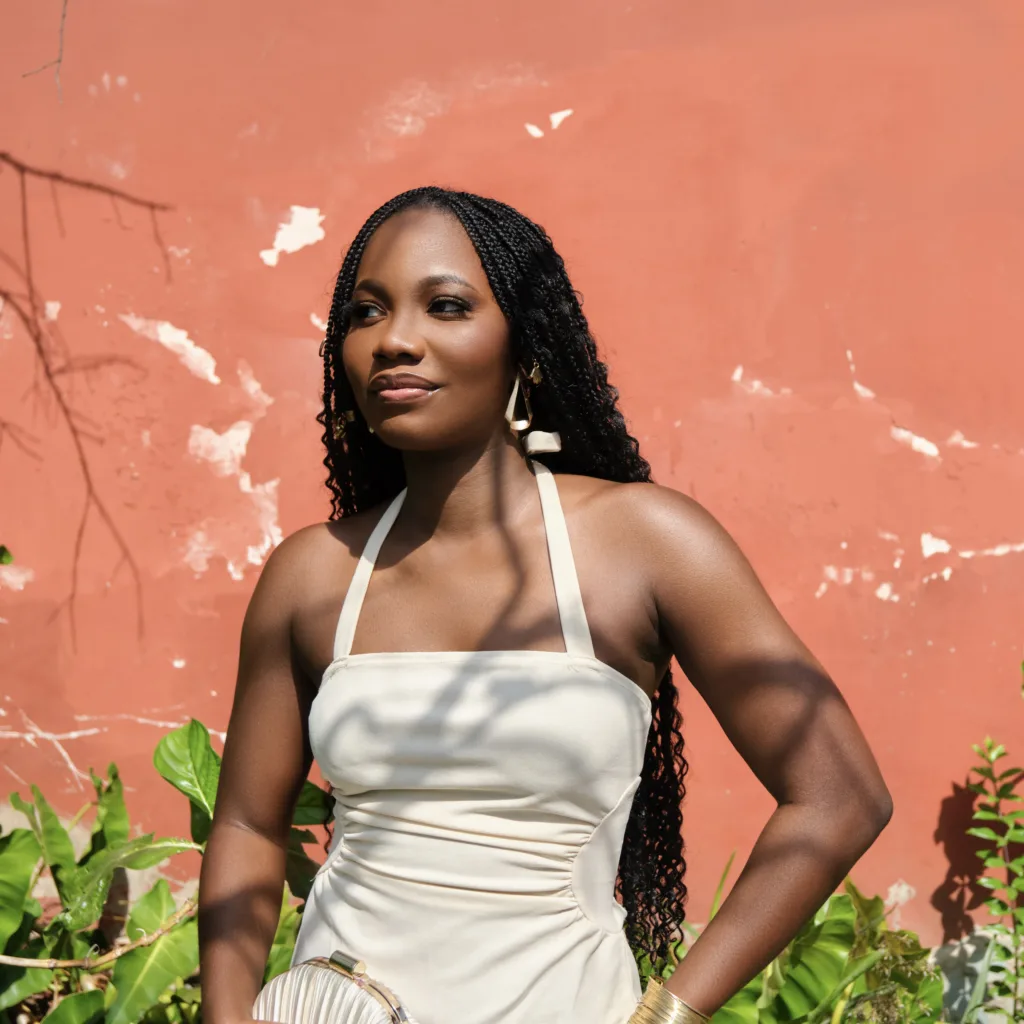
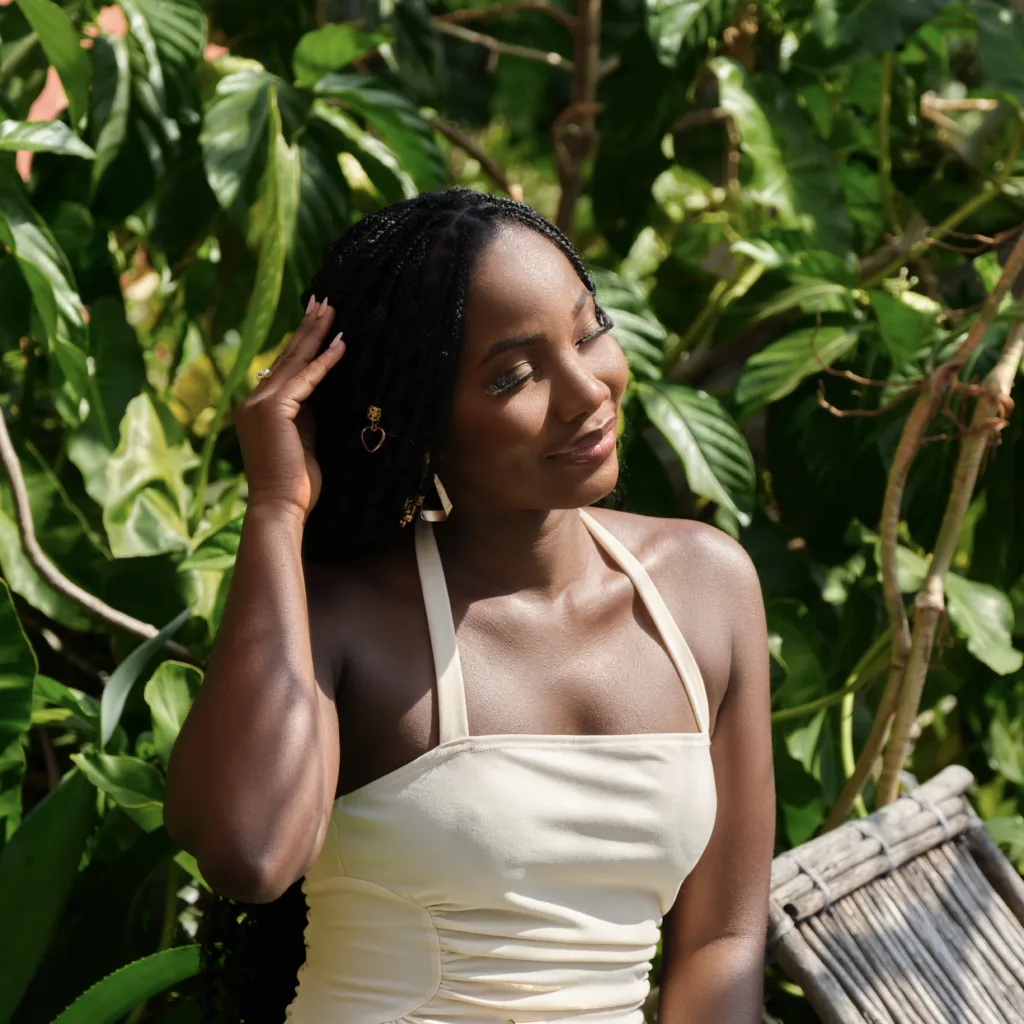
I was actually inspired by an image that I saw online and I knew that I could put my own spin on it. The imagery for the project was shot in Ghana and before I went to Ghana, I did a lot of research into where I would stay and the people I could work with. I was responsible for the creative direction and the videographer I worked with just had the job of shooting and bringing my vision to life through their expertise.
The creative direction is centred around the song ‘Woman’. I chose ‘Woman’ because it’s the kind of song you would play at your wedding. The concept of the song being played at a wedding also influenced the digital strategy for project. Before I released Here’s Where We Once Were, I posted a wedding picture of me with a video vixen to announce the project and it went crazy online. At some point I even thought that it had gone too far *laughs*. Everything had to align with my vision. I wanted bright colours with that grown aesthetic and I wanted the creative direction to be reflection of my taste in the current time.
You open with the song ‘Love Me Softly’ and it talks about how you want to be treated by a romantic interest and it got me thinking, why did you start the project with this song?
Because you always have to begin with how you intend to go. I chose the song ‘Love Me Softly’ because it sets the tone for the project. The song talks about how I want to be treated. The beat is sultry and it lives in the afro R&B space. The only other song I would have considered for the intro would have been ‘Different – (Remix)’, but because I placed it at the end of the project, it only made sense that I begin with ‘Love Me Softly’.
In listening to the song, it got me thinking about love itself. What are your love languages?
I think mine would be quality time and acts of service because I really appreciate when people go out of their way to do things for me. I feel like with words of affirmation and physical touch, if you are spending a lot of quality time together, I would like to assume that you are already saying words of affirmation and touching each other in a loving way. But spending time together doesn’t always translate to acts of service. To reiterate, the top two are quality time and acts of service because I do enjoy spending quality time with my person or even friends and family.
I read somewhere that if you are in a moment and you realise the memory of that moment will one day be considered as ‘the good old days’, then you will cherish that moment even more. So, quality time is the key love language for me.
On the track ‘So You Do’, you open the song talking about promises from a love interest. What is your relationships with failed promises?
I hate it because it’s like, I didn’t ask you to make that promise. If you speak to people close to me, they will tell you that with Ginius, a yes is a yes and no is a no. With promises, don’t come and put things in my head that you have no long term or short term plans of doing. Again, I don’t force anyone to make promises and if you fail to do what you said you were going to do, I feel like you could have spared me the mental toll you put on me.
I think the biggest reason I don’t like failed promises is because of the principles I have in my life. If I say that I am going to do something, I see it through. If I can’t do something, I will be honest with the person and tell them I can’t do what they are asking me to do. I am like that because I don’t want there to be any confusion as to whether I will do something or not.
‘Woman’ takes a different perspective because you are stating your intentions with a love interest. Why do you feel it was important to include this perspective on the project?
I know we live in a generation where people engage in casual relationships but for me, I believe that relationships need to have an end goal, and that end goal is a forever moment. You know those interviews with couple with people in their 80s or 90s and they talk about how they have been married for 30 years – that is the end goal. Look at this way, if you were to take the sexual aspect out of a relationship, then you are left with a bond. That bond is probably similar to the bond you share with your friends. ‘Woman’ is talking about that bond. I am reiterating that I am the person you can reach the forever moment with. The song talks about the future plans I had with a romantic interest and it also a reflection of my past relationship.
On ‘Different – (Remix)’ you strike a jaded figure. Would that be an accurate assessment of the song?
I think I somewhat agree with your perspective of the song because the song has questions about a lover and it comes from a place of questioning why that person could be the one. If I were to rearrange the tape, I would tell it in the order of how a relationship starts and ultimately ends. I start of the project with ‘Love Me Softly’ but before you get to the point of loving me softly, there is a talking stage and in that talking stage, that’s where the song ‘Different – (Remix)’ exists because I am asking why are you different to previous failed relationships. I think I take relationships seriously and I need someone to show me or tell me why they are different because I am not trying to get into the same failed relationship cycle. To close off, yes, I agree that I am a jaded lover.
I listened to the original version of ‘Different’ and it gives the song a whole different vibe. How did the collaboration come about for the remix?
The remix was actually the producers idea. The original version of ‘Different’ had a softer R&B feel, which I am comfortable in. The remix came about because we observed how dance genres like afro house and amapiano are taking over and we wanted to create something that speaks to that vibe. We recognised that people want to be in their feels but some people want to bounce in the club. We flipped the song last minute but the intention was to have the project as part of the project. The thinking was that we can speak to two different audiences.
When I got to ‘Test Drive’, I started to think about the sequencing of the project. Can you let me into your thinking behind the track listing?
We wanted the songs to flow into each other in terms of bpm and transitions. I always try to drop in my birthday month, which is August, and I always call August a transition month. In the UK, August is summer then we transition to autumn. The project reflects that type of vibe. It represents the hot and cold vibe of nature. If we were to arrange the tape in the sequential order of a relationship, a song like ‘Different – (Remix)’ would have been first. In my head, I didn’t think it makes sense to start a project in the club. Also, ‘Different – (Remix)’ had already been released and I wanted to give my listeners something new to grab onto. Most people that listen to ‘Love Me Softly’ enjoy the song and I feel like it hooks them and it gives them a reason to listen to the rest of the project.
The song ‘Test Drive’ feels like very intentional in terms of the song being downtempo but still maintaining the overall groove of the project. What went into the sonic direction of the project?
‘Test Drive’ actually belonged on another project. I was working with an East African artist but I will have to replace the song. Interestingly, ‘Test Drive’ was co-produced by myself and Black Sheriff’s producer. We were playing around with different dancehall and caribbean sounds and ‘Test Drive’ bridges the gap between caribbean and afro R&B vibes. I went the soft R&B route because I am a lover girl.
The song ‘Test Drive’ talks about the beginning of the relationship. It’s the honeymoon phase, whereas a song like ‘Woman’ talks about the repetitive part of the relationship. With ‘Test Drive’ it’s like okay, we like each other, now let’s make it worthwhile for each other. That’s what ‘Test Drive’ represents for me. When I look at the project, I would put ‘Test Drive’, ‘Different’ and ‘Love Me Softly’ in one bracket because of their sonics.
The girlies love ‘Test Drive’ and someone actually reached out to me and told me that they were going to send ‘Test Drive’ to their man as a way of telling them that their relationship is not a test drive.
‘Time & Attention’ touches on a romantic interest pursuing you and spending time with you. Would you say that you are an affectionate lover?
The song ‘Time & Attention’ aligns with my love languages, which is quality time. The song speaks about the point in a relationship where we are solidified because songs like ‘Love Me Softly’ and ‘Test Drive’ speak about the early moments in a relationship. As an artist, I wonder if the song come across the same way I intended. You will tell me because you are the listener.
After the journey you take us on the project, you end us off with the song ‘Lost & Numb’ which sees you in a dark space. Where do you leave us off and what do you want us to take away from the project?
‘Lost & Numb’ is actually the first song that I wrote for the project. In terms of song positioning, we have discussed how I want to be loved and my love interest has told me how different they are as a lover.
I mentioned earlier that love has an end goal, well, with ‘Lost & Numb’, we are at the point where we are lost because the forever moment in love is no longer there. This whole project is a reflection of my past relationship and with ‘Lost & Numb’, I want people to know that sometimes we don’t always get the end result that we want. At the end of my relationship, I was questioning whether I was on this journey alone now that its ended. I’m lost … and I’m numb.
For the fans, I want the copilots to listen to the project and relate to the stories I am telling. As an artist, if people can make memories to your songs then I have done well because throughout history, people associate songs with certain memories. All in all, I want the copilots to know that sometimes, things don’t end as expected and I created this project for them. I want them to be able to relate to everything I put in the music.